
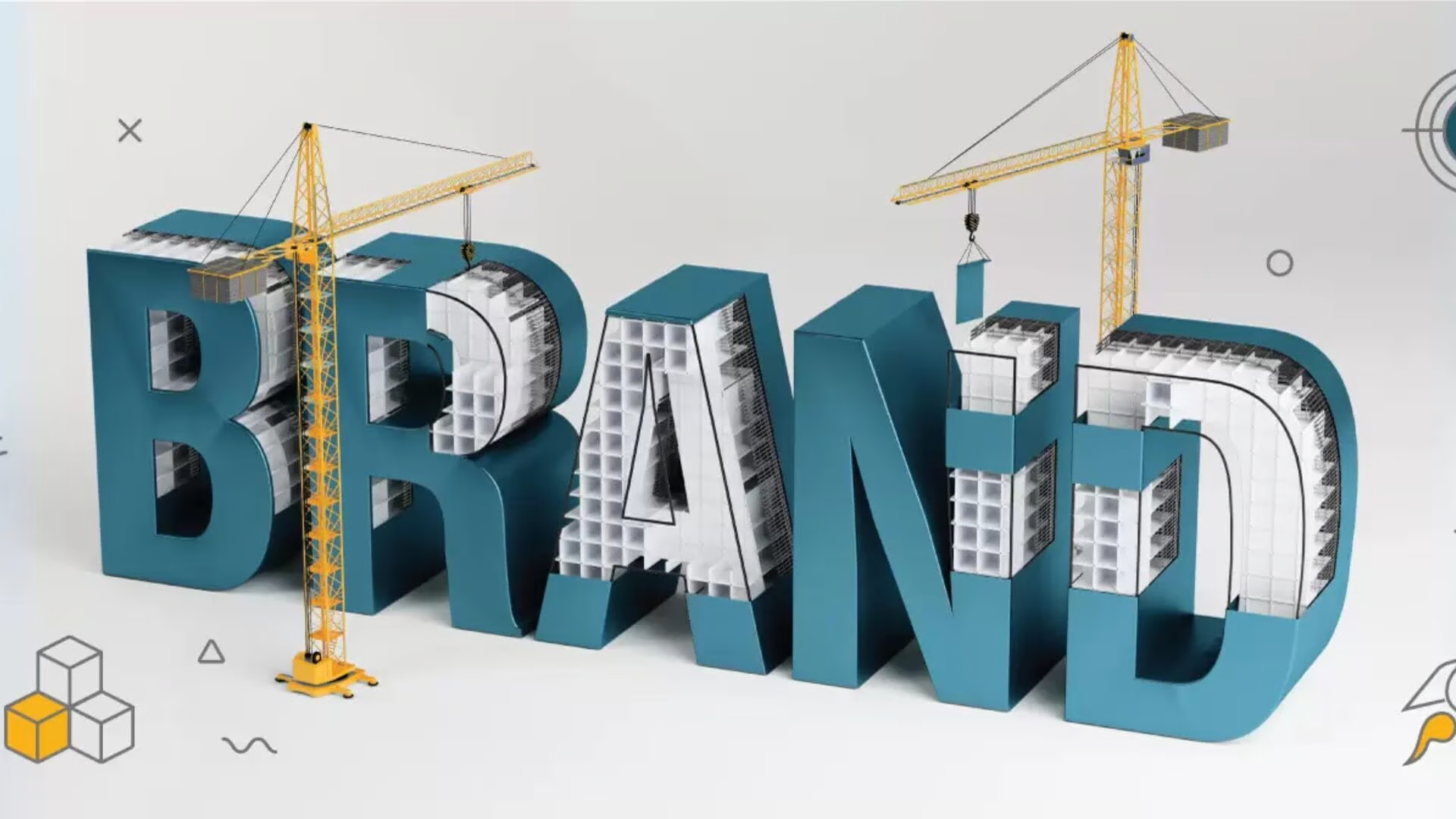
Branding is important because it creates emotional connections that drive customer loyalty and business growth, extending far beyond visual elements to encompass your company’s entire identity, values, and customer experience.
Remember that feeling you get when you slip on a perfectly worn-in t-shirt? Or the comfort of ordering your regular coffee, knowing it will be exactly how you like it? That, my friend, is the power of branding.
Let’s paint a picture, shall we? Imagine two bakeries side by side. Both bake delicious bread, but one, let’s call it “The Daily Rise”, has poured their heart into their brand. They use locally sourced ingredients and feature heartwarming stories of their bakers on their packaging. Their store welcomes you with the aroma of freshly baked goodness. The other bakery? Just a generic name and a sign that reads “Bakery.” Which one are you drawn to? The Daily Rise understood that people crave more than just a product; they seek trust and connection.
What does this translate to in real terms? Increased sales! People are naturally drawn to brands they trust and feel connected to. The Daily Rise’s compelling brand story will have customers lining up for their sourdough. Additionally, improved marketing comes into play; every interaction reinforces their brand message consistently across channels. Finally, think about enhanced employee morale, the pride bakers at The Daily Rise feel like part of something special to foster belonging and boost productivity.
In 2026, with over 4.9 billion active internet users and countless businesses competing for attention, branding has evolved from a luxury to an absolute necessity. Modern consumers make purchase decisions within 7 seconds of encountering a brand, and 90% of those decisions are influenced by visual and emotional factors beyond just product features.
Why modern businesses can’t survive without strategic branding
Strategic branding creates sustainable competitive advantages that transcend product features and pricing wars, establishing emotional connections that drive long-term customer loyalty and premium pricing power.
Consider Apple’s remarkable transformation from near-bankruptcy in 1997 to becoming the world’s most valuable company. Their success wasn’t built on superior technology alone – it was their brand identity that positioned them as innovators who “think different.” This branding strategy allowed them to command premium prices and create a cult-like following that eagerly awaits each product launch.
Research from Harvard Business Review shows that companies with strong brand consistency see revenue increases of up to 23% compared to those without cohesive branding. This consistency extends across all touchpoints, from your website design to customer service interactions.
Just as understanding why websites are still important in our digital landscape, recognizing branding’s role is crucial for business survival. Your brand serves as the foundation for all marketing efforts, including digital strategies.
The modern consumer journey involves multiple touchpoints before making a purchase decision. A strong brand ensures consistent messaging whether customers discover you through social media, search engines, or word-of-mouth recommendations. This consistency builds trust and reduces the cognitive load required for decision-making.
The complete brand ecosystem: beyond visual identity
True branding encompasses your company’s entire ecosystem of values, voice, customer experience, and cultural impact, creating a comprehensive identity that resonates across all stakeholder interactions.
Many businesses mistakenly believe branding is limited to logos, color schemes, and visual elements. While these components are important, they represent only the tip of the branding iceberg. The most successful brands in 2026 understand that branding includes:
Brand Voice and Personality: How your company communicates across all channels. Mailchimp’s friendly, approachable tone helped them stand out in the technical world of email marketing, making complex processes feel accessible to small business owners.
Customer Experience: Every interaction shapes brand perception. Disney’s obsession with customer experience – from the moment guests enter their parks to post-visit follow-ups – creates lasting emotional connections that justify premium pricing.
Company Values and Mission: Modern consumers, especially millennials and Gen Z, prefer brands that align with their values. Patagonia’s commitment to environmental sustainability isn’t just marketing – it’s woven into their business model, from supply chain decisions to activism.
The integration of technology has further expanded branding possibilities. Companies leveraging AI implementation benefits can personalize brand experiences at scale, creating more meaningful customer relationships.
Leading marketing professionals who understand marketing leadership principles recognize that branding success requires alignment between internal culture and external messaging. When employees believe in the brand they represent, authentic customer experiences naturally follow.
Measuring brand impact: tangible returns on branding investment
Effective branding delivers measurable business results including increased customer lifetime value, reduced acquisition costs, and premium pricing power that directly impact your bottom line.
Many business owners struggle to justify branding investments because the returns aren’t immediately obvious like paid advertising campaigns. However, 2026 data reveals compelling evidence of branding’s financial impact:
Customer Acquisition Cost Reduction: Strong brands benefit from organic word-of-mouth marketing. Tesla spent zero on traditional advertising in their early years, relying entirely on brand strength to drive demand. Their brand equity reduced customer acquisition costs by an estimated 85% compared to traditional automotive companies.
Premium Pricing Power: Branded products command higher prices than generic alternatives. Coca-Cola’s brand allows them to sell sugar water for significantly more than store brands, despite minimal ingredient differences. Studies show strong brands can charge 20-25% premiums without losing market share.
Employee Retention and Productivity: Companies with strong employer brands see 28% lower turnover rates and 12% higher productivity levels. Google’s brand attracts top talent and creates employee advocacy that amplifies their marketing reach.
The digital landscape has amplified branding’s importance. With search engines favoring authoritative, trusted sources, brands with strong online presence benefit from improved SEO business growth benefits. Your brand reputation directly influences search rankings and click-through rates.
Modern branding strategies increasingly incorporate emerging technologies. Companies exploring AR vs VR applications create immersive brand experiences that differentiate them from competitors still relying on traditional marketing approaches.
Brand evolution in the AI era
Artificial intelligence is revolutionizing brand building by enabling hyper-personalization, predictive customer insights, and automated brand consistency across all digital touchpoints.
The question isn’t whether AI will replace digital marketers, but how smart brands will leverage AI to enhance human creativity and strategic thinking. Forward-thinking companies are already using AI to:
Personalize Brand Experiences: Netflix’s recommendation algorithm creates personalized brand experiences for each user, making their brand synonymous with “knowing what you want to watch next.” This AI-driven personalization contributes to their industry-leading customer retention rates.
Monitor Brand Sentiment: AI tools now analyze millions of social media mentions, reviews, and online discussions in real-time, allowing brands to respond quickly to reputation threats and identify growth opportunities.
Optimize Brand Messaging: Machine learning algorithms test thousands of messaging variations to identify what resonates with specific audience segments, improving campaign effectiveness while maintaining brand consistency.
Companies implementing AI marketing strategies report 37% higher brand engagement rates and 52% faster customer acquisition compared to traditional approaches. This technological integration doesn’t diminish branding’s human elements – it amplifies them.
Building brand consistency across all touchpoints
Consistent brand experiences across every customer interaction point create cumulative trust and recognition that transforms casual buyers into loyal brand advocates.
In our interconnected world, customers encounter your brand through multiple channels – social media, websites, customer service, packaging, and word-of-mouth recommendations. Each touchpoint either reinforces or undermines your brand promise.
McDonald’s exemplifies touchpoint consistency. Whether you visit a location in Tokyo, New York, or Dubai, you’ll experience the same visual identity, service standards, and product quality. This consistency creates comfort and predictability that drives repeat visits.
Digital Touchpoint Optimization: Your online presence forms the foundation of modern brand experiences. Ensuring your website, social media profiles, and digital communications align with your brand identity is crucial for credibility.
Employee Brand Training: Every employee represents your brand, from C-suite executives to customer service representatives. Companies investing in comprehensive brand training see 3x higher customer satisfaction scores.
Physical Environment Alignment: For businesses with physical locations, the environment should reflect brand values. Apple stores’ minimalist design reinforces their brand promise of simplicity and premium quality.
FAQ
Why is branding more important than ever in 2026?
Branding has become critically important in 2026 due to increased market saturation, shorter consumer attention spans, and the rise of digital-first customer experiences. With over 330 million new businesses launching globally each year, strong branding is the primary differentiator that helps companies cut through noise and build lasting customer relationships. Modern consumers are overwhelmed with choices and rely on brand trust to make quick decisions.
How does strong branding impact customer loyalty and retention?
Strong branding increases customer loyalty by creating emotional connections that transcend product features and pricing. Research shows customers with strong brand relationships have 306% higher lifetime value and are 5x more likely to recommend the brand to others. Brands like Apple and Nike maintain customer loyalty rates above 90% because they’ve successfully created identity-based relationships where customers see the brand as an extension of their personal values and aspirations.
What’s the difference between branding and marketing?
Branding defines who you are as a company – your identity, values, personality, and promise to customers. Marketing is how you communicate and promote that brand identity to your target audience. Think of branding as your company’s personality and marketing as how you express that personality to the world. Strong branding makes marketing more effective because it provides consistent messaging and emotional hooks that resonate with customers across all promotional activities.
How long does it take to build a strong brand?
Building a strong brand typically takes 3-5 years of consistent effort, though initial brand recognition can develop within 6-12 months with focused strategies. The timeline depends on factors like industry competition, marketing budget, product quality, and consistency of brand messaging. Companies like Dollar Shave Club built strong brand recognition relatively quickly through viral marketing, while traditional brands like Rolex took decades to establish their luxury positioning.
Can small businesses compete with large brands through branding?
Yes, small businesses can absolutely compete with larger brands through strategic branding, often with advantages like greater agility, authentic storytelling, and closer customer relationships. Small businesses can focus on niche markets, personalized experiences, and local community connections that large corporations struggle to replicate. Brands like Warby Parker and Casper successfully competed against established giants by creating distinctive brand experiences and leveraging digital channels to reach customers directly.
Branding is no longer a luxury; it’s essential in our choice-saturated world. The brands that connect with us on an emotional level truly thrive. So, ask yourself: What story is your brand telling?
In 2026, successful businesses understand that branding extends far beyond visual elements to encompass every aspect of customer experience. Companies that invest in comprehensive brand strategies see measurable returns through increased customer loyalty, premium pricing power, and sustainable competitive advantages that protect against market volatility.
References
Harvard Business Review – The Business Case for Investing in Brand
Statista – Global Digital Population Statistics 2026
McKinsey & Company – The Value of Getting Personalization Right

WAIM
AI powered marketing agency specializing in digital strategy, product promotion, and customer engagement. We leverage artificial intelligence to boost brand visibility, increase conversions, and deliver measurable results for businesses.
Related News