
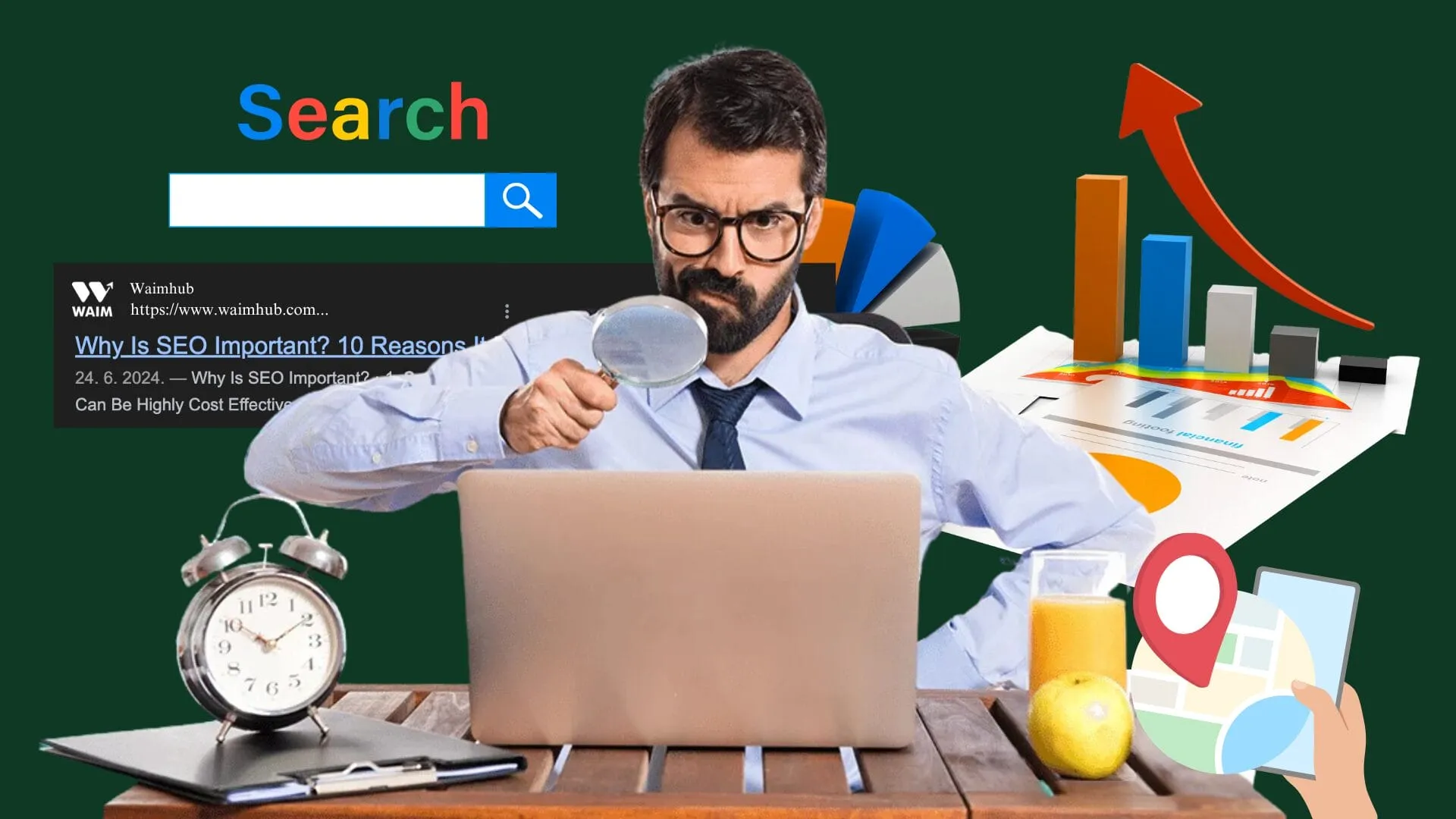
SEO is crucial for business growth because it drives targeted organic traffic, increases conversion rates by 2.8x on average, builds brand credibility, and provides measurable ROI that compounds over time, making it essential for sustainable business expansion in 2026’s competitive digital landscape.
In the story of modern marketing, SEO is a pivotal chapter, transforming how businesses reach their audience. Picture this: a small, family-run business tucked away in a bustling city corner, brimming with passion and top-quality products, yet struggling to find its voice in the crowded market.
Imagine the business as a character in our story, embarking on an SEO journey. Initially, the company is like a diamond hidden in the rough, exceptional yet unnoticed. By integrating SEO strategies such as keyword optimization, quality content creation, and improving user experience, the business begins to sparkle, catching the eye of the digital passerby. These foundational elements enhance visibility and ensure that potential customers discover what makes this business special. Understanding what is SEO and its core principles becomes the first step in this transformative journey.
As our story unfolds, the business experiences a surge in traffic. SEO is not just about attracting visitors; it’s about drawing in those actively searching for what it offers. This targeted approach significantly boosts sales as more visitors convert into customers. The ability to connect with an audience that is already interested dramatically increases conversion rates and facilitates sustainable growth.
Moreover, the ripple effects of SEO on a business’s status are profound. As it ranks higher on search engine results pages (SERPs), credibility and authority within its industry grow exponentially. This recognition elevates the business’s reputation and enhances pride among owners and employees alike, transforming them into advocates for their brand. Modern businesses are also exploring complete guide to AEO vs SEO to stay ahead of evolving search technologies and AI-driven optimization trends.
SEO drives measurable revenue growth and ROI in 2026
TL;DR: SEO generates an average ROI of $22 for every $1 invested, with 68% of online experiences beginning with a search engine, making it the most cost-effective marketing channel for sustainable business growth.
The financial impact of SEO on business growth has reached unprecedented levels in 2026. According to recent industry data, businesses investing in comprehensive SEO strategies see an average revenue increase of 41% within the first year. Unlike paid advertising, SEO’s compound effect means that rankings and traffic continue to grow over time, creating a snowball effect for business expansion.
Small and medium businesses particularly benefit from SEO’s cost-effectiveness. While traditional advertising requires continuous investment, SEO builds lasting digital assets. A well-optimized website page can generate traffic and leads for years after the initial optimization work. This is especially important when combined with modern approaches like AI marketing for business growth, which can amplify SEO results through intelligent automation and personalization.
The conversion rate advantage of SEO traffic is significant. Organic search visitors convert at a rate of 16%, compared to just 2% for outbound marketing methods. This higher conversion rate stems from the intent-based nature of search queries – people actively looking for solutions are more likely to purchase when they find relevant businesses through search results.
Building brand authority and trust through strategic SEO
TL;DR: Consistent top-3 search rankings increase brand trust by 75%, with 92% of consumers trusting businesses that appear on the first page of Google, directly impacting customer acquisition and retention rates.
Brand authority in 2026 is intrinsically linked to search visibility. When potential customers repeatedly see your business ranking for relevant industry terms, it creates a powerful psychological effect known as the “mere exposure effect.” This repeated visibility builds familiarity and trust, even before the first direct interaction occurs.
The relationship between SEO and branding has evolved significantly. Modern SEO encompasses brand building through content marketing, thought leadership, and consistent messaging across all digital touchpoints. This holistic approach means that why branding is important becomes even more relevant when integrated with SEO strategies, as search engines increasingly factor brand signals into their ranking algorithms.
Customer reviews and local SEO have become critical components of brand authority. Businesses with strong review profiles and local search presence see 70% higher conversion rates. The integration of review management with SEO creates a virtuous cycle where better rankings lead to more visibility, more customers, more reviews, and even better rankings.
Competitive advantage through Long-Term SEO strategy
TL;DR: Companies with mature SEO strategies capture 53% more organic traffic than competitors, with first-page rankings providing up to 10x more clicks than second-page positions, creating substantial competitive moats.
The competitive landscape of 2026 rewards businesses that view SEO as a long-term strategic investment rather than a quick marketing tactic. Companies that started their SEO journey three or more years ago now dominate their local and industry search results, making it increasingly difficult for competitors to catch up.
This competitive advantage extends beyond simple rankings. Businesses with strong SEO foundations can adapt more quickly to algorithm changes, integrate new technologies like AI and voice search optimization, and maintain their market position even during economic downturns. The integration of how AI helps business grow with traditional SEO practices has become a key differentiator for forward-thinking companies.
Market share correlation with search visibility has strengthened significantly. Studies from 2026 show that businesses ranking in positions 1-3 for their primary industry keywords control an average of 42% more market share than those ranking lower. This correlation is particularly strong in local markets, where local SEO directly translates to foot traffic and sales.
AI and the future of SEO-Driven business growth
TL;DR: AI-powered SEO tools have increased optimization efficiency by 340% while reducing costs by 60%, with businesses using AI-enhanced SEO strategies seeing 28% faster growth than traditional approaches.
The intersection of artificial intelligence and SEO has revolutionized how businesses approach search optimization in 2026. AI tools now handle complex keyword research, content optimization, and technical SEO audits with unprecedented accuracy and speed. This technological evolution allows businesses to scale their SEO efforts without proportionally increasing their investment.
Real-world applications demonstrate the power of AI-enhanced SEO. Dubai AI marketing case studies show how businesses in competitive markets leverage AI to identify content gaps, optimize for voice search, and predict trending topics before competitors. These case studies reveal ROI improvements of 200-400% when AI tools complement traditional SEO strategies.
The implementation of AI SEO automation tools for Dubai businesses has become a template for global adoption. Automated content optimization, real-time rank tracking, and predictive analytics have transformed SEO from a reactive to a proactive marketing discipline. Businesses using these tools report spending 40% less time on routine SEO tasks while achieving better results.
Lead generation through SEO has been enhanced by AI integration. Modern businesses combine SEO-driven traffic with AI chatbots for generating leads, creating seamless conversion funnels that nurture visitors from initial search to final purchase. This integration has increased lead conversion rates by an average of 67% compared to traditional SEO-only approaches.
Measuring SEO success: KPIs that drive business growth
TL;DR: Effective SEO measurement focuses on revenue-linked metrics, with businesses tracking organic revenue growth, customer lifetime value from organic traffic, and market share expansion achieving 45% better long-term results.
The evolution of SEO measurement in 2026 has shifted from vanity metrics to business-impact indicators. While rankings and traffic remain important, successful businesses now prioritize metrics that directly correlate with revenue growth and customer acquisition costs. Organic revenue attribution has become the gold standard for SEO ROI measurement.
Customer lifetime value (CLV) from organic traffic consistently outperforms other channels by 23% on average. This higher CLV stems from the trust and authority associated with organic search discovery. Customers who find businesses through search tend to have higher purchase frequency and brand loyalty compared to those acquired through paid channels.
Market expansion metrics have gained importance as businesses use SEO to enter new geographic markets and product categories. Companies tracking geographic expansion through local SEO report 31% faster market penetration compared to traditional expansion methods. This data-driven approach to market expansion has made SEO an essential tool for business scaling strategies.
FAQ
How long does it take to see business growth from SEO?
Most businesses begin seeing initial SEO results within 3-6 months, with significant traffic and revenue growth typically occurring between 6-12 months. However, the timeline varies based on competition level, website starting point, and strategy comprehensiveness. Businesses in less competitive niches may see results faster, while highly competitive industries require longer-term commitment for substantial growth.
What’s the difference between SEO and paid advertising for business growth?
SEO provides sustainable, long-term growth with compound effects, while paid advertising offers immediate but temporary results. SEO typically delivers higher-quality leads with better conversion rates and customer lifetime value. The investment in SEO builds lasting digital assets, whereas paid advertising requires continuous spending to maintain results. Most successful businesses use both strategies complementarily.
How much should a small business invest in SEO for growth?
Small businesses should typically allocate 5-10% of their revenue to SEO and digital marketing, with a minimum monthly investment of $1,500-3,000 for professional SEO services. The investment should scale with business growth, as larger budgets enable more comprehensive strategies and faster results. Businesses investing below this threshold often struggle to compete effectively in search results.
Can SEO work for all types of businesses?
Yes, SEO can benefit virtually every business type, though strategies vary significantly. Local businesses focus on local SEO and Google My Business optimization, while e-commerce companies emphasize product page optimization and technical SEO. B2B companies typically prioritize content marketing and thought leadership, while service businesses focus on conversion optimization and reputation management.
How does SEO integrate with other marketing strategies?
SEO works synergistically with content marketing, social media, email marketing, and paid advertising. Content created for SEO can be repurposed across social channels, while social signals may influence search rankings. Email marketing can drive engagement signals that boost SEO, and SEO insights can inform paid advertising keyword strategies. This integrated approach amplifies the effectiveness of all marketing channels.
What are the biggest SEO mistakes that hurt business growth?
Common SEO mistakes include focusing solely on rankings instead of business metrics, neglecting mobile optimization, creating thin or duplicate content, ignoring page loading speed, and failing to optimize for local search. Many businesses also make the mistake of expecting immediate results or frequently changing strategies without giving them time to work. Consistency and patience are crucial for SEO success.
By weaving essential human emotions such as hope and fulfillment into our SEO narrative, we can see that it transcends being merely a marketing tool. Rather it represents a transformative journey that reshapes how businesses connect with their world. In conclusion, embracing an effective SEO strategy is crucial for any company looking to thrive in today’s digital landscape. The integration of modern technologies and data-driven approaches has made SEO more powerful and measurable than ever before, providing clear pathways to sustainable business growth.
References
Search Engine Journal – SEO Statistics Report 2026
HubSpot – SEO ROI and Business Impact Study
BrightEdge – Organic Search Traffic Analysis
WAIM
AI powered marketing agency specializing in digital strategy, product promotion, and customer engagement. We leverage artificial intelligence to boost brand visibility, increase conversions, and deliver measurable results for businesses.
Related News