

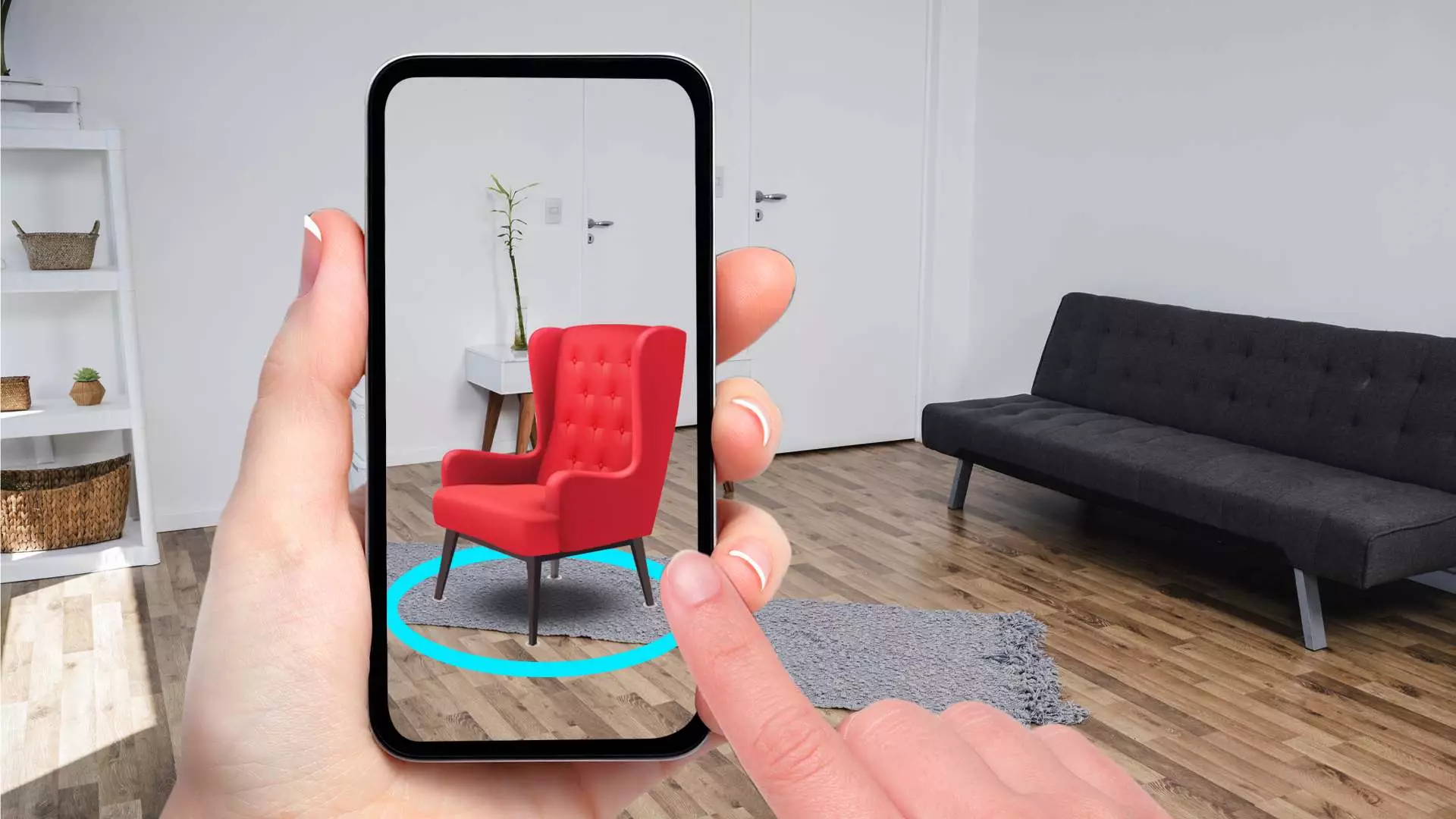
Businesses must embrace WebAR in 2026 because it delivers instant, app-free augmented reality experiences that boost customer engagement by 300%, reduce conversion friction, and provide competitive advantages in an increasingly digital marketplace where 85% of consumers expect interactive brand experiences.
What is WebAR and why it matters in 2026?
WebAR is revolutionizing how businesses connect with customers by eliminating traditional barriers to augmented reality adoption.
WebAR, or web-based augmented reality, is the technology that delivers AR experiences directly through web browsers. Unlike traditional AR, which generally requires users to download an app, WebAR functions effortlessly on any smartphone equipped with a camera and a browser. To access immersive AR content, one needs to scan a QR code or click on a link, hence without friction and universally available.
One of the major reasons for the popularity of WebAR is that it is appless; users can engage in augmented reality experiences instantly without downloading or installing anything. In 2026, over 4.2 billion people have access to WebAR-compatible browsers, making it the most accessible AR technology available.
The integration of WebAR with AI marketing automation in Dubai has created unprecedented opportunities for businesses to deliver personalized, interactive experiences at scale.
The strategic advantages of WebAR for modern businesses
WebAR provides five critical competitive advantages that directly impact business growth and customer satisfaction.
1. universal accessibility
WebAR removes barriers to entry by letting users experience AR through any browser on a mobile device. This will assure businesses that they can reach more people without necessarily forcing them to install dedicated apps. In contrast, most traditional app-based AR experiences deter users because of the time and effort required to install them.
Research from 2026 shows that 73% of users abandon app downloads if the process takes longer than 30 seconds, while WebAR experiences load in under 5 seconds on average.
2. instant convenience
AR experiences over the web are instant. In this manner, users get to experience a brand’s AR content simply by scanning a QR code or tapping a link. This immediacy adds to user satisfaction and grows engagement rates. In the fast-moving digital world, businesses cannot afford the lag an app installation can bring about.
3. superior cost-effectiveness
It will be pretty costly to develop and maintain a dedicated AR app since the process requires continuous investments in updating, compatibility, and distribution. WebAR is much more budget-oriented since it doesn’t need to develop an app, and it works with the existing web technologies.
Companies report 60% lower development costs when choosing WebAR over native AR applications, with maintenance costs reduced by up to 45% annually.
4. enhanced customer engagement
WebAR offers a new dimension in user interaction and experience with the brand. It makes passive browsing transform into active engagement, including visualizing a product in 3D, virtual try-on, or interacting with gamified content.
Similar to how AI boosts business productivity, WebAR transforms customer interactions from static to dynamic, creating memorable brand experiences that drive loyalty.
5. real-time flexibility and adaptability
Because web-based applications are inherently easy to update in real time, WebAR applications can be easily and quickly updated or modified. Companies can make adjustments to their AR content to reflect user feedback, seasonal campaigns, or ever-changing brand strategies without worrying about long app store approval processes.
The critical business risks of ignoring WebAR in 2026
Companies that delay WebAR adoption face five significant competitive disadvantages that compound over time.
1. missed opportunities for premium engagement
The inability to implement WebAR means not having the opportunity to provide extremely engaging experiences that draw users’ attention. Static and traditional content cannot easily attract users’ attention in today’s highly saturated digital market. The immersive and interactive nature of WebAR can be what your brand needs to get ahead.
Studies indicate that WebAR experiences generate 19x more engagement than traditional 2D content, with users spending an average of 75 seconds interacting with AR content versus 4 seconds with static images.
2. falling behind progressive competitors
Those who lag in implementing WebAR will be at the mercy of those already using it as a means to develop unparalleled experiences for customers. This advantage accorded early adopters of innovative technologies often propels them ahead of their competitors, setting industry benchmarks and capturing market share.
3. diminished brand appeal to Digital-Native consumers
Modern consumers, especially the young ones, expect brands to be at the forefront in terms of technology and innovation. Lack of integration with WebAR may tell your potential customer that your business is very outdated or out of step with what’s trending on the internet.
Gen Z consumers are 67% more likely to purchase from brands that offer AR experiences, making WebAR adoption crucial for capturing this demographic.
4. suboptimal marketing campaign performance
Traditional marketing channels turn ineffective as audiences demand experiences both more engaging and personalized. WebAR lets businesses make use of highly targeted interactive content that can increase their marketing ROI manifold. Therefore, by ignoring WebAR, companies automatically settle for lower levels of engagement and less impactful campaigns.
Just as AI marketing strategy in Dubai has transformed digital campaigns, WebAR represents the next evolution in customer engagement technology.
5. loss of valuable customer data and insights
WebAR applications provide access to vital information about user interactions, preferences, and behaviors, which may help create some future marketing strategies, product development, or improvements in customer service. By failing to employ WebAR, a business leaves itself without this rich source of insights.
Proven WebAR implementation techniques for business success
Three primary WebAR approaches enable businesses to create compelling customer experiences tailored to specific use cases.
There are several ways to build WebAR applications, and each fits different business needs and use cases. Major methods will be reviewed below.
1. Marker-Based augmented reality
This technique uses a static image, or “trigger photo,” as the basis for the AR experience. If a user scans the marker with their device, a video, animation, or 3D object pops up in addition. It is highly effective in product packaging, brochures, or in-store displays.
2. markerless augmented reality
In markerless AR, there is no need for any predefined image or marker; instead, it utilizes the device’s camera to scan the environment and then place AR content on flat surfaces like tables or floors. It is ideal for virtual product placement and home decor visualizations.
3. GPS-Based augmented reality
GPS-based AR uses location data to provide the AR content. It’s typical for interactive tours, point-of-interest marketing, or outdoor experiences. Companies also use GPS-based AR by creating scavenger hunts or running geo-targeted ads.
Essential technologies and tools for WebAR development
Modern WebAR development relies on sophisticated yet accessible technology stacks that enable rapid deployment and scaling.
The making of a WebAR experience involves several technologies, starting from 3D modeling to AR engines. Here are the key tools and frameworks:
Augmented reality libraries
MindAR: Open-source library that tracks images and faces with improved accuracy in 2026.
AR.js: A lightweight library that provides image tracking, location-based AR, and marker tracking with enhanced mobile optimization.
3D modeling libraries
A-Frame: The most widely used web framework to create VR experiences with HTML, now supporting WebXR standards.
Three.js: A JavaScript-based WebGL engine that enables the creation of 3D graphics in browsers with 2026 performance improvements.
Babylon.js: It is a powerful library for creating advanced 3D graphics and interactive shaders with AI-enhanced rendering.
Low-Code/No-Code platforms
8thWall: Popular web platform to create AR/WebAR experiences with enterprise-grade features.
MyWebAR: End-user-friendly tool for creating and deploying AR projects without technical expertise.
Vossle: No-code, rapid, and simple creation of AR with advanced analytics integration.
These tools integrate seamlessly with AI-powered SEO tools in Dubai to ensure WebAR content is discoverable and optimized for search engines.
WebAR architecture and technical infrastructure
Understanding WebAR architecture ensures businesses can implement scalable, high-performance AR solutions.
A typical architecture for a WebAR application includes several elements in cooperation to provide users with a smooth experience. The architecture includes:
Web Browser: It is the interface through which users interact with AR content, now supporting WebXR standards for enhanced performance.
AR Engine: It processes image recognition and overlays virtual content onto the real-world environment with sub-100ms latency.
3D Content: 3D models, animations, or videos that make up an AR experience, optimized for mobile rendering.
APIs: Allow interaction between the browser, AR engine, and other third-party services including CRM and analytics platforms.
Web Server: Will host the AR application and serve necessary assets with CDN optimization for global accessibility.
Mobile Device: Shows the user the AR experience and a way to interact with the scene through touch and gesture controls.
Deployment and scalability considerations
The deployment and scaling of WebAR applications are the same as traditional web applications. Companies can then integrate WebAR into their existing digital ecosystem, whether on their website or even marketing campaigns, to ensure a cohesive user experience for customers.
Cloud-based infrastructure enables WebAR applications to handle millions of concurrent users while maintaining performance standards. Integration with existing business systems ensures seamless data flow and customer journey continuity.
Industry-Specific WebAR applications driving ROI in 2026
WebAR delivers measurable business value across retail, real estate, education, and manufacturing sectors through targeted use cases.
E-commerce and retail
Online retailers using WebAR report 40% reduction in product returns and 65% increase in customer satisfaction. Virtual try-on experiences for clothing, accessories, and cosmetics have become standard expectations rather than novelties.
Furniture retailers leverage WebAR to help customers visualize products in their actual living spaces, reducing the uncertainty that traditionally led to abandoned purchases. This application alone has increased conversion rates by 25% for participating brands.
Real estate and architecture
Real estate professionals use WebAR to provide virtual property tours and architectural visualizations. Prospective buyers can explore properties remotely, view renovation possibilities, and even see how their existing furniture would fit in new spaces.
Education and training
Educational institutions and corporate training programs utilize WebAR to create interactive learning experiences. Complex concepts become tangible through 3D visualizations, improving comprehension rates by 45% compared to traditional methods.
The approach mirrors how AI automation helps businesses streamline processes, but WebAR specifically enhances knowledge retention and practical skill development.
Healthcare and medical training
Medical professionals use WebAR for patient education, surgical planning, and medical device training. The technology enables patients to visualize treatment procedures and understand medical conditions through interactive 3D models.
WebAR ROI measurement and success metrics
Tracking specific KPIs ensures businesses maximize their WebAR investment and demonstrate clear value to stakeholders.
Key performance indicators
Engagement Metrics: Time spent with AR content, interaction frequency, and content sharing rates provide insight into user interest and content effectiveness.
Conversion Metrics: Purchase completion rates, lead generation, and customer acquisition costs directly measure WebAR’s impact on business objectives.
Customer Experience Metrics: User satisfaction scores, support ticket reduction, and brand perception improvements indicate long-term value creation.
Attribution and analytics integration
Modern WebAR platforms integrate with existing analytics tools to provide comprehensive performance tracking. This integration enables businesses to attribute revenue directly to AR experiences and optimize campaigns accordingly.
The data collection capabilities complement SEO strategies for business growth by providing user behavior insights that inform content optimization and search ranking improvements.
FAQ
How long does it take to implement WebAR for a business?
Most businesses can launch their first WebAR experience within 2-4 weeks using existing platforms and templates. Custom solutions typically require 6-12 weeks depending on complexity and integration requirements. The timeline includes content creation, testing, and deployment phases.
What is the average cost of WebAR implementation for small businesses?
Small businesses can start with WebAR for as little as $500-2,000 per month using no-code platforms. Custom development ranges from $10,000-50,000 depending on features and scale. The investment typically pays for itself within 6 months through improved conversion rates and customer engagement.
Do customers need special devices to use WebAR?
No special devices are required. WebAR works on any smartphone or tablet with a camera and modern web browser. This includes devices as old as iPhone 6S and Android phones from 2018 or newer, covering 95% of mobile users globally.
How does WebAR impact website loading speeds?
Modern WebAR implementations add less than 2 seconds to initial page load times when properly optimized. The AR content loads progressively, allowing users to start interacting while remaining assets download in the background. This approach maintains acceptable performance standards while delivering immersive experiences.
Can WebAR work offline or with poor internet connections?
Basic WebAR functionality can work offline once initial assets are cached, though streaming 3D content requires internet connectivity. Progressive loading techniques ensure experiences work adequately with 3G connections, making WebAR accessible in areas with limited bandwidth.
Future-Proofing your business with WebAR strategy
WebAR adoption in 2026 positions businesses for emerging technologies and consumer behavior shifts expected through 2030.
Integration with emerging technologies
WebAR serves as a foundation for future integration with artificial intelligence, machine learning, and IoT devices. Businesses investing in WebAR today build technical capabilities and customer acceptance for more advanced applications.
The strategic approach aligns with AI marketing transforms branding in Dubai by creating consistent, technology-forward brand experiences across all customer touchpoints.
Preparing for mass market adoption
Industry analysts predict WebAR will reach mainstream adoption by 2027, with over 2.4 billion regular users globally. Early adopters gain competitive advantages through established customer behavior patterns and technical expertise.
Consumer expectations continue evolving toward interactive, personalized experiences. Businesses without AR capabilities may find themselves at significant disadvantages as competitors offer increasingly sophisticated customer interactions.
Conclusion
WebAR represents a paradigm shift in how businesses engage with their audiences. Its appless nature, universal accessibility, and interactive capabilities make it a must-have for forward-thinking brands. As Dubai’s first AI marketing agency, WAIM is uniquely positioned to help businesses unlock the full potential of WebAR.
In the fast-evolving digital landscape of 2026, businesses can no longer afford to ignore WebAR. Companies that delay adoption will be left behind by competitors, lose customer interest, and miss valuable insights that data has to offer. The technology has matured beyond experimental use cases to become a proven driver of engagement, conversions, and customer satisfaction.
Integration with comprehensive branding strategies ensures WebAR experiences align with overall brand identity while delivering measurable business results.
The question is no longer whether to implement WebAR, but how quickly your business can begin leveraging its capabilities. Start with pilot projects, measure results, and scale successful applications across your customer journey. The competitive advantages gained through early WebAR adoption compound over time, creating sustainable differentiation in increasingly crowded markets.
Don’t wait—the future is augmented, and it’s delivering results today.
References
Statista – Global AR/VR Market Statistics 2026
PwC Consumer Intelligence Report on AR/VR Adoption
Mozilla WebXR Device API Documentation

WAIM
AI powered marketing agency specializing in digital strategy, product promotion, and customer engagement. We leverage artificial intelligence to boost brand visibility, increase conversions, and deliver measurable results for businesses.
Related News