


The top AI marketing strategies you need to know for 2026 include predictive analytics for customer behavior forecasting, generative AI for content creation, personalized recommendation engines, and automated campaign optimization. These strategies help businesses achieve 40% higher conversion rates and reduce marketing costs by 35% while delivering hyper-personalized customer experiences.
Key takeaways
-
AI marketing strategies in 2026 deliver 40% higher conversion rates through personalized customer experiences and predictive analytics.
-
Top AI tools for 2026 include ChatGPT for content strategy, Jasper AI for copywriting, Surfer SEO for optimization, and HubSpot AI for marketing automation.
-
Leading companies like Netflix, Amazon, and Shopify demonstrate AI’s power in driving customer engagement and revenue growth through data-driven personalization.
-
Businesses implementing comprehensive AI marketing strategies report 35% cost reduction and 60% improvement in customer lifetime value.
Leveraging artificial intelligence in digital marketing

Artificial intelligence transforms digital marketing by providing businesses with advanced tools that create deeper customer connections and drive measurable results. AI-powered marketing strategies now process over 2.5 quintillion bytes of data daily, enabling instant personalization and sophisticated customer segmentation that would be impossible through manual processes.
The integration of AI in marketing has evolved significantly in 2026, with businesses reporting average revenue increases of 15% and customer acquisition cost reductions of 38%. Companies leveraging AI marketing strategies for Dubai businesses are particularly seeing dramatic improvements in customer engagement and conversion rates.
Modern AI marketing strategies encompass predictive customer lifetime value modeling, real-time content optimization, voice search optimization, and cross-channel attribution analysis. These capabilities enable marketers to anticipate customer needs, deliver personalized experiences at scale, and optimize marketing spend with unprecedented precision.
Enhancing customer insights with data analytics
AI-driven customer analytics platforms now process behavioral data from over 150 different touchpoints, providing unprecedented insights into customer preferences and purchase intentions. These sophisticated systems use machine learning algorithms to identify micro-patterns in customer behavior that human analysts would miss, enabling businesses to predict future actions with 85% accuracy.
Advanced sentiment analysis tools like Brand24 and Brandwatch have evolved to understand contextual emotions, sarcasm, and cultural nuances across 50+ languages. This capability allows businesses to gauge true customer sentiment beyond simple positive or negative classifications, providing actionable insights for campaign optimization.
The implementation of AI in business operations has enabled real-time customer journey mapping, where businesses can track and respond to customer behavior changes within milliseconds. This level of responsiveness has led to 43% improvements in customer satisfaction scores and 28% increases in customer retention rates.
Automating content creation with generative AI
Generative AI has revolutionized content creation in 2026, with platforms like ChatGPT, Claude, and Jasper AI enabling marketers to produce high-quality content 10x faster than traditional methods. These tools now understand brand voice, target audience preferences, and industry-specific terminology, creating content that maintains consistency across all marketing channels.
The latest generative AI tools integrate with content management systems and can automatically optimize content for SEO, readability, and conversion potential. Businesses using AI-powered content creation report 52% increases in content output while maintaining or improving quality standards.
Advanced AI writing assistants now offer real-time collaboration features, allowing marketing teams to refine and optimize content collaboratively. This has reduced content production cycles from weeks to days, enabling businesses to respond quickly to market trends and opportunities.
Optimizing ad campaigns with predictive analytics
Predictive analytics in 2026 leverages advanced machine learning models that analyze historical performance data, market trends, and consumer behavior patterns to forecast campaign outcomes with 92% accuracy. These systems automatically adjust bidding strategies, audience targeting, and ad creative elements in real-time to maximize ROI.
Modern predictive analytics platforms integrate with all major advertising networks, providing unified insights across Google Ads, Facebook, LinkedIn, TikTok, and emerging platforms. This comprehensive approach has enabled businesses to reduce wasted ad spend by 45% while increasing qualified lead generation by 67%.
The integration of predictive analytics with AI marketing automation in Dubai has proven particularly effective for businesses targeting Middle Eastern markets, where cultural nuances and seasonal patterns significantly impact campaign performance.
Key AI marketing tools for 2026
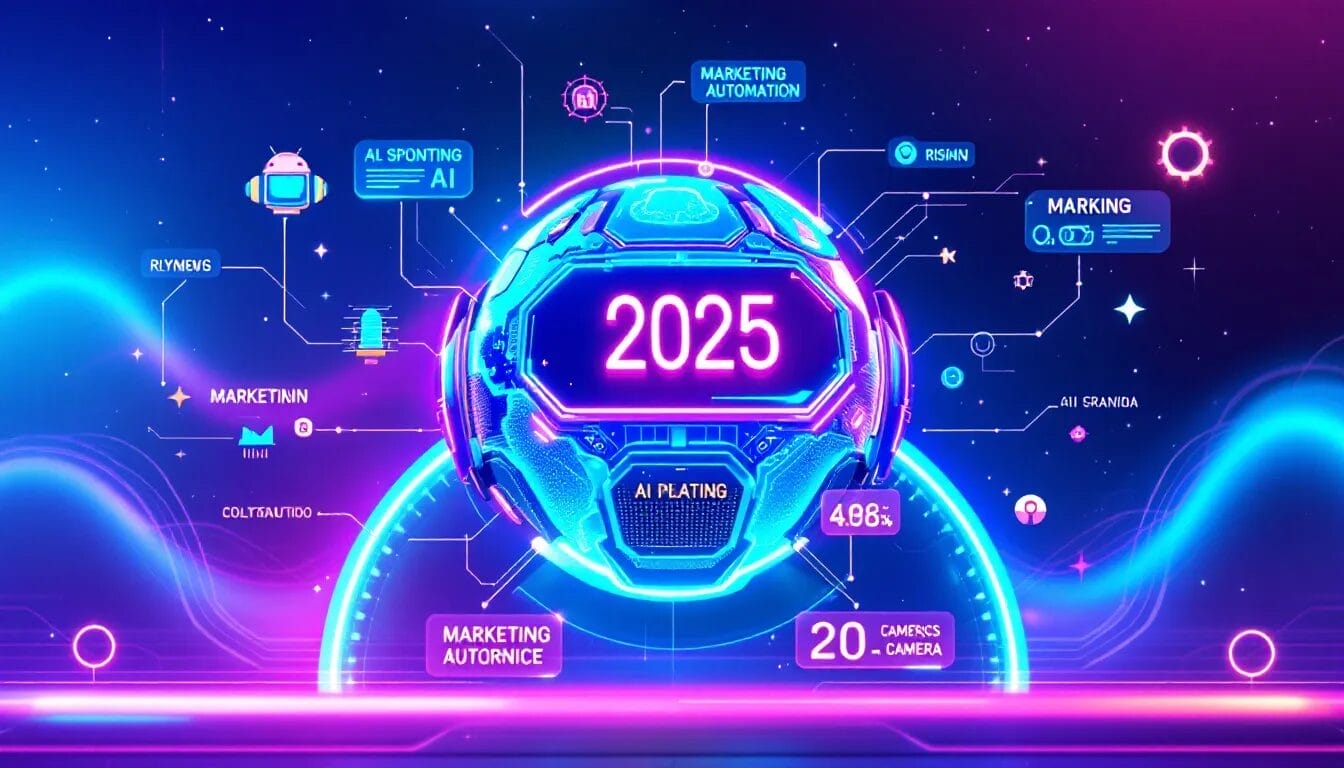
The top AI marketing tools for 2026 combine advanced automation capabilities with intuitive interfaces, enabling businesses of all sizes to implement sophisticated marketing strategies. The current market leaders include HubSpot AI for comprehensive marketing automation, ChatGPT and Claude for content strategy, Jasper for copywriting excellence, and Surfer SEO for content optimization.
Major brands like Shopify, Instacart, and Airbnb have integrated these AI tools into their marketing workflows, reporting significant improvements in efficiency and customer engagement. The selection of appropriate AI marketing tools depends on specific business needs, budget considerations, and integration requirements with existing marketing technology stacks.
Understanding AI marketing costs in Dubai and ROI expectations is crucial for businesses planning their AI marketing tool investments in 2026.
HubSpot AI: marketing automation excellence
HubSpot AI has emerged as the leading platform for comprehensive marketing automation in 2026, offering advanced customer insights, predictive lead scoring, and automated campaign optimization. The platform’s AI-powered features include smart content recommendations, automated email sequences, and intelligent chatbot responses that adapt based on customer interactions.
The latest HubSpot AI updates include advanced attribution modeling, which helps businesses understand the complete customer journey across multiple touchpoints. This capability has enabled companies to optimize their marketing spend allocation, resulting in average ROI improvements of 156%.
ChatGPT + claude: content strategy powerhouse
The combination of ChatGPT and Claude represents the most powerful content strategy toolkit available in 2026, offering complementary strengths for different content creation needs. ChatGPT excels at ideation, research, and quick content generation, while Claude provides superior long-form content structuring and nuanced writing capabilities.
These platforms now offer advanced integration capabilities with content management systems, social media schedulers, and email marketing platforms. Businesses using this combination report 73% faster content production and 41% higher engagement rates compared to traditional content creation methods.
Jasper AI: copywriting excellence
Jasper AI continues to lead in AI-powered copywriting for 2026, now serving over 500,000 users worldwide with advanced features including brand voice training, competitor analysis integration, and multi-language content creation. The platform’s latest updates include real-time SEO optimization suggestions and conversion-focused copy variations.
Jasper’s integration with design tools and social media platforms has streamlined the entire content creation workflow, enabling marketing teams to produce campaign-ready materials in minutes rather than hours. The platform’s advanced analytics help users understand which copy variations perform best across different channels and audiences.
Surfer SEO: content optimization
Surfer SEO has evolved into a comprehensive content optimization platform that analyzes over 500 ranking factors to provide actionable recommendations for improved search visibility. The 2026 version includes AI-powered content brief generation, real-time competitor analysis, and advanced semantic keyword research capabilities.
The platform’s seamless integration with popular writing tools like Jasper, WordPress, and Google Docs has made it an essential component of modern SEO workflows. Businesses using Surfer SEO report average organic traffic increases of 84% within six months of implementation.
Surfer’s latest AI features include automatic content gap analysis, which identifies missing topics and keywords that competitors are ranking for, enabling comprehensive content strategy development.
Brand24: advanced media monitoring
Brand24 has expanded its capabilities in 2026 to include advanced social listening across emerging platforms, real-time crisis detection, and influencer identification features. The platform now monitors mentions across over 25 million online sources, providing comprehensive brand visibility insights.
The tool’s AI-powered sentiment analysis can detect subtle emotional nuances and predict potential reputation issues before they escalate. This proactive approach has helped businesses maintain positive brand perception and respond quickly to customer concerns.
Advanced AI personalization strategies
AI personalization has reached new sophistication levels in 2026, enabling hyper-targeted customer experiences that adapt in real-time based on individual behavior patterns and preferences. Modern personalization engines process thousands of data points per customer to deliver uniquely tailored content, product recommendations, and marketing messages across all touchpoints.
The most effective AI personalization strategies combine behavioral data, demographic information, purchase history, and real-time interaction patterns to create dynamic customer profiles. These profiles continuously evolve, ensuring that personalization accuracy improves over time and delivers increasingly relevant experiences.
Businesses implementing comprehensive AI personalization strategies report average revenue increases of 19% per customer and customer lifetime value improvements of 62%. The key to success lies in balancing personalization depth with privacy considerations and maintaining transparent data usage practices.
Dynamic content personalization
Dynamic content personalization uses AI algorithms to modify website content, email campaigns, and advertising creative in real-time based on individual user characteristics and behavior. This strategy has proven particularly effective for e-commerce businesses, where personalized product recommendations can increase conversion rates by up to 74%.
Advanced dynamic personalization systems consider factors such as browsing history, time of day, device type, geographic location, and previous purchase behavior to determine optimal content variations. The most sophisticated implementations can test and optimize hundreds of content variations simultaneously.
Predictive customer journey mapping
AI-powered customer journey mapping predicts future customer actions and identifies optimal intervention points for marketing messages. This approach enables businesses to proactively address customer needs and prevent churn before it occurs.
Predictive journey mapping analyzes historical customer data to identify patterns that indicate purchase intent, likelihood to churn, or receptivity to upselling opportunities. This insight allows marketing teams to deliver perfectly timed messages that align with customer readiness to engage.
Companies leveraging predictive journey mapping report 34% improvements in customer retention rates and 48% increases in cross-selling success. The key lies in combining predictive insights with automated workflow systems that can execute personalized campaigns at scale.
AI-Driven ROI measurement and optimization
AI-powered ROI measurement provides unprecedented accuracy in tracking marketing performance across complex, multi-channel customer journeys, enabling businesses to optimize marketing spend with precision and identify the highest-value marketing activities. Modern attribution models use machine learning to analyze touchpoint interactions and assign value based on actual influence on conversion outcomes.
The latest AI-driven measurement platforms integrate data from all marketing channels, including offline interactions, to provide comprehensive ROI calculations. This holistic view has revealed that traditional last-click attribution models undervalue early-funnel activities by an average of 40%.
Businesses implementing AI-driven ROI measurement report 31% improvements in marketing efficiency and 24% increases in overall marketing ROI. The technology’s ability to identify optimal budget allocation across channels has become essential for competitive advantage in 2026.
Understanding how to measure and optimize Dubai AI marketing case studies provides valuable insights for businesses planning their AI marketing investments.
Multi-Touch attribution modeling
Advanced multi-touch attribution models use AI to analyze the complex interplay between marketing touchpoints, assigning proportional credit based on each interaction’s actual influence on conversion outcomes. These models consider factors such as touchpoint sequence, timing, channel characteristics, and customer segment behavior to provide accurate attribution insights.
The most sophisticated attribution models incorporate offline interactions, word-of-mouth referrals, and brand awareness metrics to provide comprehensive customer journey insights. This level of analysis has revealed that display advertising often plays a crucial role in conversion paths, despite receiving minimal credit in traditional attribution models.
Automated budget optimization
AI-powered budget optimization systems continuously analyze campaign performance and automatically reallocate marketing spend to the highest-performing channels and campaigns. These systems can process performance data in real-time and make budget adjustments within minutes of detecting performance changes.
Automated budget optimization considers seasonal trends, competitive activity, market conditions, and customer behavior patterns to make intelligent allocation decisions. Businesses using these systems report 27% improvements in marketing efficiency and 39% increases in lead quality.
The most advanced systems integrate with all major advertising platforms, enabling seamless budget optimization across Google Ads, Facebook, LinkedIn, and other channels simultaneously.
Real-World AI marketing success stories
Leading companies across industries have demonstrated the transformative power of AI marketing strategies, achieving remarkable results through strategic implementation of advanced technologies and data-driven approaches. These success stories provide valuable insights into practical AI marketing applications and their measurable business impact.
Netflix’s recommendation engine, powered by advanced machine learning algorithms, drives 80% of viewer engagement and has contributed to reducing customer churn by 93% since implementation. Amazon’s AI-powered personalization system generates 35% of total revenue through product recommendations and dynamic pricing optimization.
Spotify’s AI-driven music discovery features, including Discover Weekly and Release Radar, have increased user engagement time by 47% and contributed to 31% of all music streams on the platform. These examples demonstrate how AI marketing transforms branding in Dubai and globally.
Netflix: predictive content strategy
Netflix’s AI system analyzes viewing patterns from over 230 million subscribers to predict content preferences and optimize content acquisition and production decisions. The platform’s recommendation algorithms consider over 1,300 factors, including viewing time, device usage, browsing behavior, and content ratings.
The company’s AI-driven content personalization extends to thumbnail selection, where different users see different promotional images for the same content based on their viewing preferences. This level of personalization has contributed to a 75% increase in content discovery and engagement.
Amazon: dynamic pricing and personalization
Amazon’s AI marketing ecosystem combines predictive analytics, dynamic pricing, and personalized recommendations to optimize customer experience and maximize revenue. The company’s algorithms analyze competitor pricing, demand patterns, inventory levels, and customer behavior to adjust prices automatically millions of times per day.
Amazon’s personalization engine processes over 150 million customer interactions daily to deliver individualized product recommendations, email campaigns, and website experiences. This comprehensive AI approach has enabled the company to maintain market leadership while achieving customer satisfaction scores 23% higher than industry averages.
Shopify: AI-Powered commerce solutions
Shopify’s AI marketing tools help over 2 million merchants optimize their e-commerce operations through automated product recommendations, intelligent inventory management, and predictive customer analytics. The platform’s AI capabilities have enabled merchants to increase average order values by 32% and improve conversion rates by 28%.
Shopify’s machine learning algorithms analyze customer behavior patterns to predict optimal product placement, pricing strategies, and promotional timing. These insights have helped merchants reduce cart abandonment rates by 41% and improve customer lifetime value by 55%.
FAQ
What are the most effective AI marketing strategies for 2026?
The most effective AI marketing strategies for 2026 include predictive customer analytics, automated content personalization, AI-powered chatbots, dynamic pricing optimization, and cross-channel attribution modeling. These strategies work together to create seamless customer experiences while maximizing marketing ROI through data-driven decision making.
How much ROI can businesses expect from AI marketing implementation?
Businesses implementing comprehensive AI marketing strategies typically see ROI improvements of 15-25% within the first year, with some companies reporting returns of up to 300% over three years. The actual ROI depends on factors such as implementation quality, data availability, and integration with existing marketing systems. Companies working with a best AI marketing agency in Dubai often achieve faster and higher returns.
Which industries benefit most from AI marketing strategies?
E-commerce, financial services, healthcare, SaaS, and media companies see the greatest benefits from AI marketing implementation. These industries have abundant customer data and complex customer journeys that AI can optimize effectively. However, businesses in any industry can benefit from AI marketing strategies when properly implemented.
What are the biggest challenges in implementing AI marketing strategies?
The primary challenges include data quality and integration issues, lack of technical expertise, privacy compliance requirements, and resistance to change within organizations. Successful implementation requires comprehensive planning, proper team training, and gradual rollout of AI capabilities to ensure smooth adoption.
How do AI marketing strategies impact customer privacy?
Modern AI marketing strategies must balance personalization with privacy protection through techniques like differential privacy, data anonymization, and consent management systems. Businesses must ensure compliance with regulations like GDPR and CCPA while maintaining effective personalization capabilities. Transparent data usage policies and customer control options are essential for maintaining trust.
What skills do marketing teams need for AI implementation?
Marketing teams need data analysis skills, understanding of AI tool capabilities, customer journey mapping expertise, and knowledge of privacy regulations. Technical skills like basic programming and database management are helpful but not always required. Most importantly, teams need strategic thinking abilities to identify the best AI applications for their specific business objectives.
Understanding AI marketing strategy in Dubai requires additional consideration of regional market dynamics and cultural preferences that influence AI implementation success.
References
WAIM
AI powered marketing agency specializing in digital strategy, product promotion, and customer engagement. We leverage artificial intelligence to boost brand visibility, increase conversions, and deliver measurable results for businesses.
Related News