
Understanding the Differences Between Augmented Reality (AR) and Virtual Reality (VR)
AI Marketing
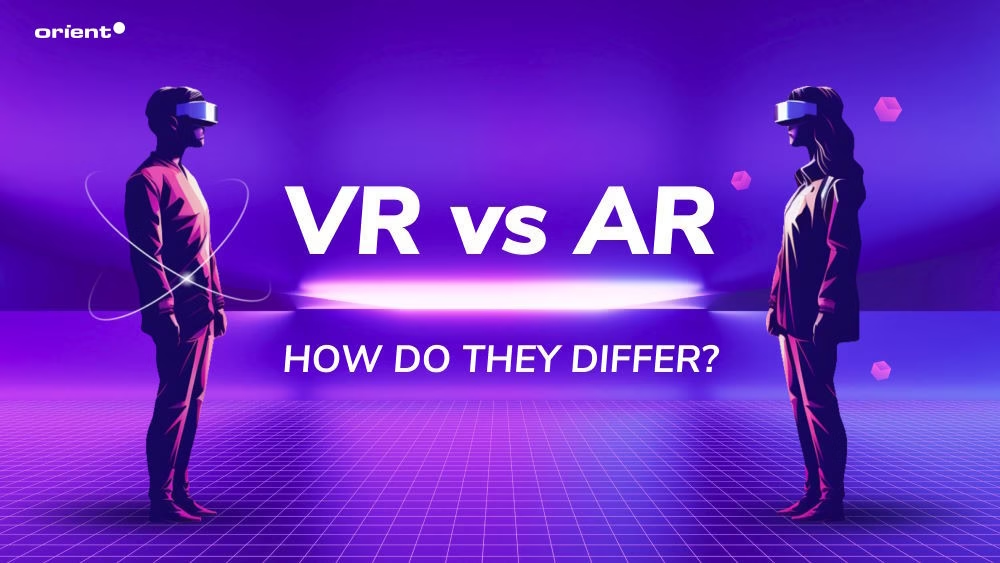
In 2026, Augmented Reality (AR) overlays digital elements onto the real world while Virtual Reality (VR) creates fully immersive virtual environments. For marketing managers in Saudi Arabia and UAE, understanding these key differences is essential for selecting the right technology to engage customers and drive business growth in the evolving digital landscape.
Introduction to AR and VR
Augmented reality (AR) and virtual reality (VR) are two groundbreaking technologies that are reshaping how we interact with the world around us. AR enhances the physical world by overlaying digital information and virtual objects onto it, creating a blended experience that enriches our everyday life. Imagine using your mobile devices to see virtual furniture in your living room before making a purchase or navigating through a city with digital directions superimposed on the streets.
On the other hand, VR creates a fully immersive digital environment that replaces the physical world entirely. When you put on a VR headset, you are transported to a virtual world where you can explore, interact, and engage with virtual environments as if they were real. This technology is particularly powerful in gaming, training simulations, and virtual tours, offering experiences that are both captivating and transformative.
According to Statista, the global AR market is projected to reach $162 billion by 2026, while the VR market is expected to hit $31 billion in the same year. These figures highlight the growing importance of how augmented reality transforms your world and the potential for businesses to leverage these technologies for competitive advantage.
The virtuality continuum
The virtuality continuum is a theoretical framework that helps us understand the spectrum of experiences created by AR and VR technologies. This continuum ranges from the physical world, where no digital elements are present, to the fully immersive virtual world, where the physical world is completely replaced by a digital environment.
In between these extremes, we find various levels of immersion and interaction. For instance, AR sits closer to the physical world on this spectrum, as it overlays digital elements onto real-world scenarios, enhancing but not replacing the physical environment. VR, however, is positioned at the far end of the continuum, offering a fully immersive experience that transports users to a completely virtual environment. This framework helps us visualize and differentiate the unique experiences that AR and VR can provide.
Extended reality (XR)
Extended reality (XR) is an umbrella term that encompasses augmented reality (AR), virtual reality (VR), and mixed reality (MR). XR technologies alter our perception of reality by either adding digital elements to the physical world or creating a fully immersive digital environment. This broad category of technologies has the potential to revolutionize various industries, including education, healthcare, entertainment, and manufacturing.
For example, in education, XR can create interactive learning experiences that make complex subjects more accessible and engaging. In healthcare, XR can assist in surgical simulations and patient care, providing doctors with enhanced tools for diagnosis and treatment. The entertainment industry can leverage XR to create immersive experiences that captivate audiences, while manufacturing can use XR for design, prototyping, and training, improving efficiency and reducing costs.
Technical requirements and hardware differences
AR and VR require fundamentally different hardware setups, directly impacting implementation costs and user accessibility for marketing campaigns in the UAE and Saudi Arabia.
AR technology typically requires less specialized equipment, making it more accessible to a broader audience. Most AR experiences can be delivered through smartphones and tablets using the device’s camera, sensors, and processing power. Advanced AR applications may utilize smart glasses like Microsoft HoloLens 2 or Apple Vision Pro, but these are not essential for basic AR marketing implementations.
In contrast, VR demands dedicated hardware including VR headsets, controllers, and often external tracking systems. Popular VR devices in 2026 include the Meta Quest 3, PlayStation VR2, and HTC Vive Pro 2. These devices create isolated experiences that require users to dedicate focused time and physical space, limiting their practicality for widespread marketing campaigns.
For businesses in Dubai and Riyadh, this hardware distinction is crucial. Why businesses need WebAR becomes evident when considering that web-based AR experiences can reach millions of smartphone users without requiring app downloads or specialized equipment.
Immersion levels and user experience comparison
The level of immersion fundamentally differentiates AR and VR experiences, with each serving distinct marketing objectives and customer engagement strategies.
AR provides what experts call “partial immersion,” where users remain aware of their physical surroundings while digital elements enhance their reality. This allows for multitasking and social interaction, making AR ideal for retail environments, social media campaigns, and real-world product demonstrations. Users can easily switch between digital and physical interactions without removing devices or exiting applications.
VR offers “full immersion,” completely replacing the user’s visual and auditory environment. This creates powerful emotional connections and memorable experiences but requires users’ undivided attention. VR excels in storytelling, virtual tours, and experiential marketing where the goal is to transport users to entirely different environments.
Recent studies from PwC indicate that 73% of consumers prefer AR experiences for product visualization, while 68% favor VR for immersive brand storytelling. This data helps marketing managers in the Middle East choose the appropriate technology based on campaign objectives and target audience preferences.
The basics: what is augmented reality?
Augmented Reality (AR) bridges the gap between the real world and the digital realm. By overlaying virtual elements onto real-world environments, AR technology enhances a user’s perception and interaction with their surroundings, with applications across various industries such as maintenance and healthcare. Unlike VR, which immerses users in an entirely virtual environment, AR adds layers of digital content to the real world, accessible via smartphones, tablets, or AR glasses.
For businesses in Dubai and Saudi Arabia, AR presents an opportunity to:
-
Engage Customers Creatively: Imagine customers in Riyadh trying on virtual clothing or accessories via AR apps or directly on your website without stepping into a store.
-
Simplify Decision-Making: Real estate companies in Jeddah can use AR to offer virtual property tours, allowing clients to visualize spaces from their homes.
-
Enhance Branding: By integrating AR into marketing campaigns, brands can create memorable experiences that resonate with tech-savvy consumers. This aligns perfectly with AI marketing transforms branding in Dubai strategies.
Advantages of AR
AR offers several advantages that make it an attractive technology for various industries:
-
Enhanced User Experience: AR enhances the physical world by overlaying digital information and virtual objects onto it, creating a more interactive and engaging experience for users. For instance, customers can use AR apps on their mobile devices to visualize how a piece of furniture would look in their home before making a purchase.
-
Increased Productivity: AR can significantly boost productivity by providing users with real-time information and instructions. This reduces the need for manual labor and improves efficiency. For example, in manufacturing, AR can guide workers through complex assembly processes, reducing errors and speeding up production.
-
Cost-Effective: AR can be more cost-effective than traditional methods of training and education. By eliminating the need for physical prototypes and reducing the risk of errors, AR can save businesses time and money. For instance, AR-based training programs can provide immersive learning experiences without the need for expensive equipment or travel.
By leveraging these advantages, businesses can create more engaging, efficient, and cost-effective solutions that enhance their operations and customer experiences. Understanding why augmented reality is important helps companies make informed decisions about technology adoption.
Exploring virtual reality: a fully immersive experience
In contrast, Virtual Reality (VR) creates a fully immersive experience by simulating an entirely digital world. Virtual reality creates a fully immersive experience by utilizing headsets and computer-generated imagery. Using devices like VR headsets, gloves, and sensors, users are transported to environments that can range from a fantastical gaming universe to a highly detailed corporate simulation.
While VR is groundbreaking in gaming, training, and entertainment sectors, it’s less practical for widespread marketing campaigns due to its reliance on specialized hardware and isolated user experiences. For example, hosting a VR-based event in Dubai might limit participation to those with access to VR equipment, whereas AR campaigns are accessible to anyone with a smartphone.
The Three Types of VR Systems
Virtual Reality technology can be categorized into three distinct types, each offering different levels of immersion and interaction:
-
Non-Immersive VR: Also known as desktop VR, this type allows users to control characters or activities within software through a computer but doesn’t provide full immersion. Examples include flight simulators or architectural visualization software viewed on traditional screens.
-
Semi-Immersive VR: This type offers partial virtual experience through high-resolution displays, surround sound systems, and sometimes haptic feedback. Users maintain some awareness of their physical environment while experiencing enhanced digital content. Racing simulators and flight training systems often use semi-immersive VR.
-
Fully Immersive VR: This represents the most advanced form of VR, completely isolating users from their physical environment and providing 360-degree virtual experiences. Users wear head-mounted displays (HMDs) with motion tracking, allowing natural movement and interaction within virtual environments.
Key differences between AR and VR
Understanding the distinctions between AR and VR is crucial when deciding which technology best suits your marketing objectives. Here are the main differences:
| Feature | Augmented Reality (AR) | Virtual Reality (VR) |
|---|---|---|
| Environment | Enhances the real-world setting | Creates a fully virtual environment |
| User Interaction | Users interact with both real and virtual elements | Users are fully immersed in a virtual world |
| Accessibility | Accessible via smartphones and tablets | Requires specialized devices like VR headsets |
| Cost of Implementation | Generally more cost-effective and scalable | Often requires higher investment in hardware/software |
| Marketing Potential | Ideal for interactive campaigns and real-world utility | Limited to niche experiences due to hardware barriers |
| User Isolation | Users remain socially connected | Users are isolated from physical surroundings |
| Content Creation Cost | Lower development costs for basic applications | Higher development costs for quality experiences |
Why AR and digital elements matter for marketing in Dubai and saudi arabia
AR’s adaptability and accessibility make it a powerful tool for businesses in the Middle East. In vibrant hubs like Dubai and Riyadh, where innovation and customer engagement are paramount, AR stands out as a practical solution for integrating digital elements with the real-world environment. This technology enhances user experience by seamlessly blending digital content with tangible, real-world settings, making it ideal for:
-
Retail and E-Commerce: AR allows customers to visualize products in their environment. For example, furniture brands can let customers in Dubai see how a couch fits into their living room using AR apps.
-
Events and Activations: Brands in Saudi Arabia can use AR to enhance experiences at exhibitions or product launches. Imagine an AR-powered interactive booth at Jeddah’s marketing expos that leaves attendees talking about your brand.
-
Tourism and Hospitality: Hotels and resorts in the UAE can leverage AR to offer virtual tours, helping guests explore amenities before booking.
-
Education and Training: AR-based tools can enhance corporate training programs, making them engaging and effective for employees in Saudi Arabia.
The integration of top AI marketing strategies with AR technology creates even more powerful marketing solutions, enabling personalized experiences and real-time customer insights.
Implementation costs and ROI analysis for middle east markets
Understanding the financial implications of AR versus VR implementation is crucial for marketing budget allocation and expected returns in Saudi Arabia and UAE markets.
AR implementation typically requires lower upfront investments, with basic smartphone-based AR experiences costing between $10,000-$50,000 to develop. Advanced AR applications with custom features may range from $50,000-$200,000. The scalability of AR allows for broader reach without additional hardware costs for end-users, making it attractive for mass-market campaigns.
VR implementation involves higher initial costs, ranging from $50,000-$500,000 for quality experiences, plus ongoing hardware and maintenance expenses. VR content requires specialized 3D modeling, animation, and testing across multiple devices, increasing development timelines and costs. However, VR can deliver powerful brand experiences and emotional connections that justify higher investments for specific use cases.
According to recent market research, businesses in the GCC region report average ROI improvements of 35% for AR marketing campaigns and 28% for VR initiatives in 2026. The key difference lies in reach and accessibility – AR campaigns can potentially reach millions of smartphone users, while VR experiences target smaller, more engaged audiences.
Successful case studies from Dubai AI marketing case studies demonstrate how businesses combine AR with AI analytics to maximize marketing ROI and customer engagement metrics.
Choosing the right technology: decision framework for marketing managers
Marketing managers in Saudi Arabia and UAE need a systematic approach to evaluate whether AR or VR better aligns with their campaign objectives, budget constraints, and target audience preferences.
When evaluating AR for your marketing strategy, consider these factors:
- Target Audience Reach: AR can reach broader audiences through smartphones, making it ideal for consumer-focused campaigns
- Integration with Existing Channels: AR easily integrates with websites, social media, and mobile apps
- Real-World Context: AR excels when products benefit from real-world visualization and sizing
- Budget Scalability: AR offers better scalability for limited marketing budgets
Choose VR when your campaign requires:
- Immersive Storytelling: VR creates powerful emotional connections through complete environmental control
- Training and Education: VR provides safe, controlled environments for skill development
- Premium Brand Experiences: High-end brands can use VR to create exclusive, memorable experiences
- Virtual Tourism: Hotels, real estate, and tourism companies can offer complete virtual tours
The decision framework should also consider regional factors specific to Middle East markets, including internet connectivity, smartphone penetration rates, and cultural preferences for technology adoption. Recent surveys indicate that 89% of UAE residents and 82% of Saudi residents regularly use AR features on social media platforms, suggesting strong market readiness for AR marketing initiatives.
WAIM AI marketing agency: your AR experts in Dubai
At WAIM AI Marketing Agency, we specialize in integrating cutting-edge technologies like AR into marketing strategies tailored for businesses in Dubai and Saudi Arabia. Our expertise in AI-driven solutions ensures your campaigns are innovative, data-driven, and aligned with your target audience’s preferences.
We create immersive digital experiences that allow users to navigate seamlessly between physical and digital worlds, setting us apart in the realm of mixed reality technologies. Our approach combines AI marketing for business growth with innovative AR implementations to deliver measurable results for our clients.
Why Choose WAIM for AR Marketing?
-
Custom Solutions: From interactive product demos to AR-based advertising, we create bespoke solutions that reflect your brand identity.
-
AI-Powered Insights: Our AI tools analyze customer behavior, helping you refine AR campaigns for maximum engagement.
-
Local Expertise: With deep knowledge of Middle Eastern markets, we understand cultural nuances and consumer preferences that drive successful AR campaigns.
-
Proven Results: Our portfolio includes successful AR implementations for major brands across Dubai, Riyadh, and Abu Dhabi, delivering measurable ROI improvements.
Our comprehensive approach follows AI marketing strategy in Dubai best practices, ensuring your AR campaigns align with broader digital marketing objectives and deliver sustainable business growth.
Frequently asked questions
What is the main difference between augmented reality AR and virtual reality VR?
The main difference lies in how each technology interacts with your environment. AR overlays digital elements onto the real world, allowing you to see both virtual and physical objects simultaneously through your smartphone or AR glasses. VR completely replaces your real environment with a fully digital world, requiring a headset that blocks out the physical world entirely.
What is AR and VR in marketing?
AR in marketing allows customers to visualize products in their real environment, try virtual samples, or access additional product information by pointing their phone at items. VR in marketing creates immersive brand experiences, virtual showrooms, or storytelling environments that fully engage customers in controlled digital spaces. Both technologies help brands create memorable, interactive experiences that drive engagement and sales.
What are the three types of VR?
The three types of VR are: 1) Non-immersive VR, which displays virtual content on regular screens like desktop simulations; 2) Semi-immersive VR, which provides partial virtual experiences through large displays and surround sound while maintaining some real-world awareness; and 3) Fully immersive VR, which completely isolates users in virtual environments using head-mounted displays and motion tracking for complete sensory replacement.
Which technology is better for small businesses in Saudi Arabia and UAE?
AR is generally more suitable for small businesses due to its lower implementation costs, broader accessibility through smartphones, and easier integration with existing marketing channels. Small businesses can create effective AR experiences for product visualization, social media campaigns, and customer engagement without requiring specialized hardware or significant upfront investments.
How much does AR and VR marketing implementation cost in the Middle East?
AR marketing implementations typically range from $10,000-$200,000 depending on complexity, while VR projects can cost $50,000-$500,000 or more. AR offers better scalability and lower ongoing costs since users access experiences through their existing smartphones, making it more cost-effective for most marketing campaigns in Saudi Arabia and UAE markets.
Conclusion
Understanding the differences between AR and VR is essential for marketing managers in Saudi Arabia and UAE to make informed technology decisions. While VR creates powerful immersive experiences, AR offers greater accessibility, lower costs, and broader reach for most marketing objectives. The choice between these technologies should align with your campaign goals, target audience, budget, and desired user experience.
As we move through 2026, the convergence of AR technology with AI-powered marketing strategies presents unprecedented opportunities for businesses in the Middle East. By partnering with experienced agencies and leveraging the right technology for your specific needs, you can create compelling customer experiences that drive engagement, build brand loyalty, and deliver measurable business results.
References
WAIM
AI powered marketing agency specializing in digital strategy, product promotion, and customer engagement. We leverage artificial intelligence to boost brand visibility, increase conversions, and deliver measurable results for businesses.
Related News